The potential for Hawke’s Bay to become a major player in the novel fermentation economy is set out in a strategic case commissioned by the Hawke’s Bay Regional Economic Development Agency (HBREDA), released this week.
The Foodeast Haumako Fermentation Strategic Case outlines how the region could position itself in one of the fastest-emerging areas of global food innovation – precision and biomass fermentation – centred on Foodeast Haumako’s role as the regional hub for food, beverage and agritech innovation.
The case lays out a clear, staged pathway – from building capability and validating demand to forming the right science and industry partnerships – creating momentum while ensuring any development is underpinned by evidence.
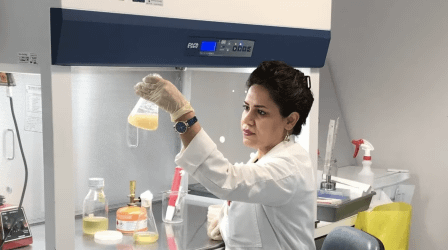
Novel fermentation is a rapidly advancing field using precision and biomass fermentation to create high-value ingredients, functional proteins, flavours and nutritional compounds. Unlike traditional fermentation used for products such as kombucha and yoghurt, novel fermentation relies on microbes and bioprocessing to produce consistent, scalable ingredients for food, beverage and nutraceutical applications. It is recognised globally as a critical step towards building food security, offering a scalable way to produce essential ingredients as traditional production systems face climate, resource and supply-chain constraints.
Foodeast Haumako Chief Executive Michael Bassett-Foss says the case confirms that Hawke’s Bay is well placed to help New Zealand extract value from the global shift toward fermentation-enabled ingredients and functional foods.
We’re seeing major international momentum but also major lessons from countries that scaled too fast. This report gives us the clarity and discipline needed to focus on real commercial opportunities, build capability, and connect with national science and industry partners.
Michael Bassett-Foss, Chief Executive, Foodeast Haumako
The case notes Hawke’s Bay’s strengths:
- a high concentration of food and beverage manufacturers producing suitable feedstocks and by-products
- established relationships across research, government and industry
- having a collaborative innovation base at Foodeast Haumako designed to support cross-sector development in the food, beverage and agritech industries
- New Zealand’s strong global reputation for high-quality, traceable food production.
However, it also points to national challenges that would impact any region looking to invest in this space: limited domestic fermentation infrastructure, competition for skills, and the need to focus on specific high-value applications rather than broad exploratory investment.
HBREDA Chief Executive Richard Briggs says the strategic case provides a realistic foundation for a long-term regional opportunity.
This is about careful, evidence-based steps. Rather than announcing funding or facilities, we’re identifying the conditions for success, the partnerships needed, and the alignment required with New Zealand’s science priorities so that any future decisions are grounded in strong commercial logic.
Richard Briggs, Chief Executive, HBREDA
Globally, precision and biomass fermentation continue to attract significant investment as companies seek new, sustainable ways to create ingredients, flavours and functional proteins, and international analysis shows both the growth potential and the risks of scaling without validated demand.
Foodeast Haumako will now lead engagement with industry, research organisations and government partners to test opportunities and build capability across the region.
“Our focus is on supporting industry to make the most of the opportunities by connecting the right people and de-risking the process,” said Mr Bassett-Foss. “Before any large-scale investment is contemplated, we need clear demand, committed partners and alignment across the national system. This report sets that pathway.”
The HBREDA Board will continue to work with Foodeast Haumako on next steps to ensure any progression delivers sustainable economic impact for Hawke’s Bay.
Read the strategic case and summary here.